Hand Block vs Screen Print Suit Sets: How to Tell Before You Buy

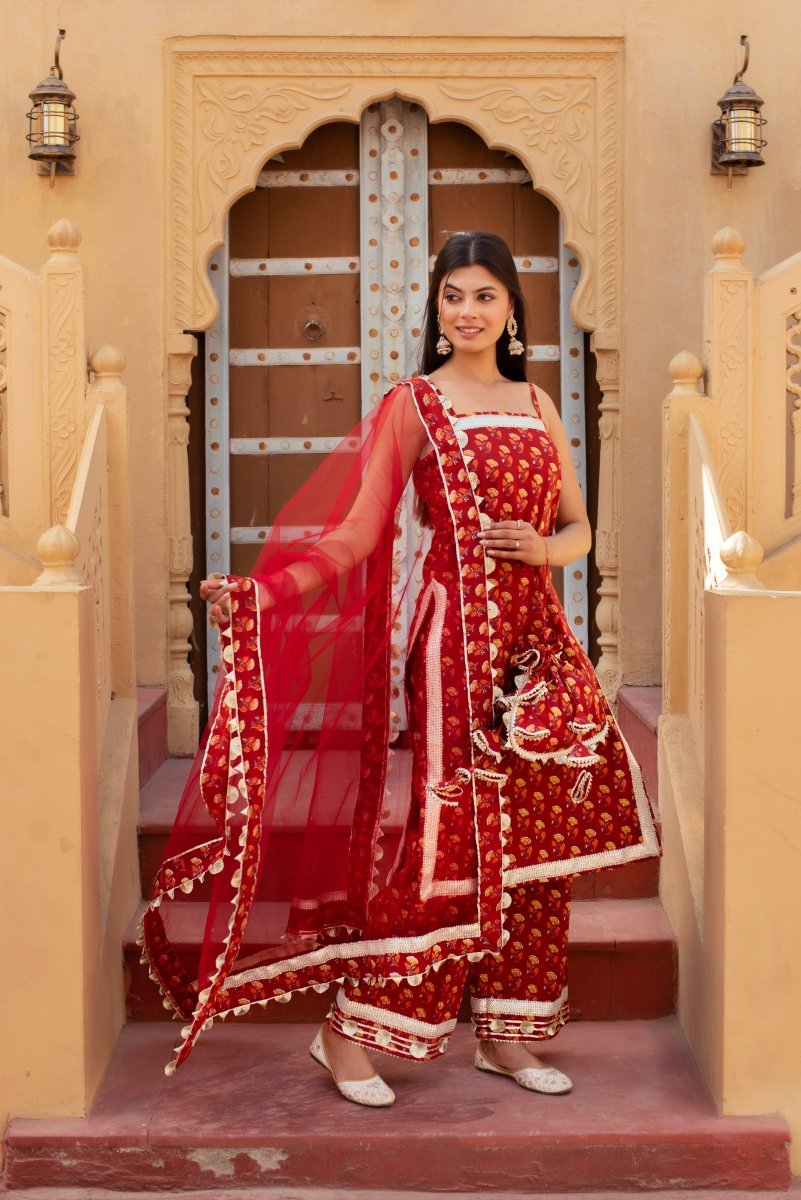
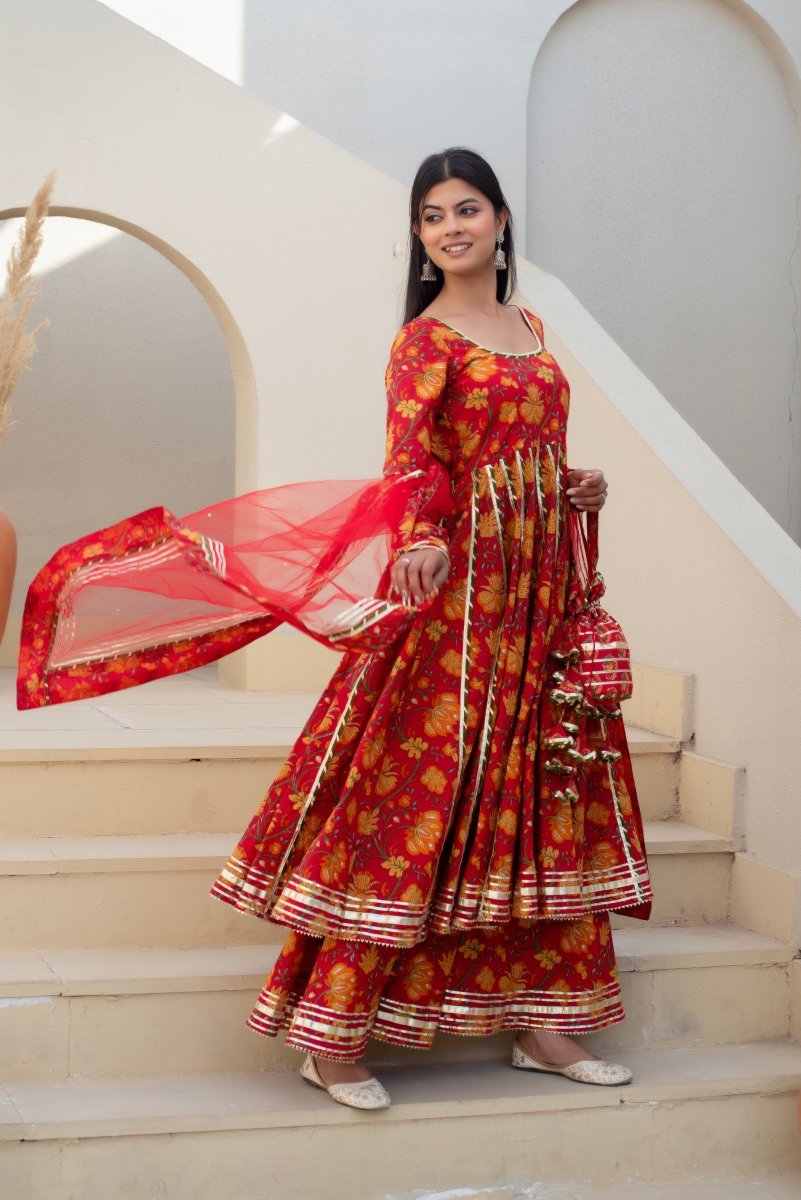
Chhipa Bazar Red Mastani Hand Block Gota Patti Anarkali Set with Soft Net Dupatta
The short answer: Hand block print is stamped by hand with carved wooden blocks, so it usually shows small irregularities: slightly uneven colour edges, repeats that are not perfectly identical, and dye that has soaked through to the back of the fabric. Screen print pushes dye through a mesh screen, so it tends to look flatter and more uniform, with only faint colour on the reverse. Screen print is not a bad thing. The problem is only when it is sold as hand block. Online, where you cannot flip the fabric, look for the words "hand block" in the product name and description, zoom into the photos, and ask the seller for a close-up of the reverse.
I got curious about this after noticing how many "block print" kurtas online look a little too perfect, with every flower identical, edge to edge. If I am paying for handwork, I want to know I am getting it. Here is what I have learned from craft guides, and how I apply it when shopping for suit sets online, using a few hand block pieces from Pomcha Jaipur as examples.
How each one is made

Chhipa Bazar Grey Hand Block Cotton Anarkali with Soft Net Dupatta
According to iTokri's guide to the two methods:
- Hand block printing uses a carved wooden block, often sheesham, rosewood or teak, that is stamped onto the fabric by hand.
- Screen printing uses a screen made of nylon or steel mesh, and a blade is moved across it to push dye through onto the fabric.
- Block printing is the slower, more time-consuming of the two.
Jaipur has a long connection with the first one. Wikipedia describes Bagru, a town near Jaipur, as home to a traditional hand block printing craft practised by the Chhipa community, known for natural dyes and a mud-resist method called dabu, and Bagru print carries a Geographical Indication. I like that Pomcha's Chhipa Bazar label shares its name with that community. The grey Chhipa Bazar anarkali above is a cotton anarkali and pants with a soft net dupatta and gota patti work, around ₹19,889 when I checked in October 2026.
Five things to check in person

Sunhari Kamini Hand Block Print Cotton Sharara Set with Cotton Dupatta
These come from Barkha Boutique's guide to block, screen and digital print. Treat them as rules of thumb, not lab tests:
- Flip it over. Hand block printed fabric usually shows dye on the reverse, less vivid than the front. Screen print usually shows only faint colour on the back.
- Compare the repeats. If every single motif is identical in colour, spacing and outline, the guide says it is probably screen print being sold as block.
- Look at the colour edges. Block print has slightly rough, uneven edges. Screen print outlines tend to be sharper.
- Look at the colour fill. Screen print gives flat, even colour areas. Hand application usually has small variations.
- Ask what it is. The same guide points out that screen printing is the main commercial method in Indian ethnic wear and is not inferior in itself. A good seller will just tell you.
My own sixth check is price. Hand block printing takes longer, so if a full "hand block" suit set costs less than a plain one, I get suspicious. That is my instinct, not a rule.
How I check when shopping online

Sunhari Peach Hand Block Print Cotton Tiered Anarkali with Soft Net Dupatta
You cannot flip a fabric through a screen, so I adjust:
- Read the name and the description. On Pomcha's site the hand block pieces say so right in the title, like the Sunhari peach tiered anarkali (around ₹5,849, listed down from ₹11,699) and the Sunhari Kamini sharara set (around ₹5,199).
- Notice when a seller names a different method. I trust a store more when it labels other prints honestly too. This yellow cotton silk kurta set says "digital print" for its organza dupatta right in the product name.
- Zoom into the photos. Look at a large motif and the one next to it. Tiny differences in spacing or colour are a good sign for hand block.
- Ask for a photo of the reverse. Any seller of hand block work should be able to send one.
- Check the craft tag or collection. Many of Pomcha's hand block pieces sit under labels like Chhipa Bazar, Sunhari Festive and Dhoop Chaav.

Yellow Cotton Silk Kurta with Digital Print Organza Dupatta Set, labelled as digital print
Which one should you actually buy?

Dhoop Chaav Aqua Blue Cotton Hand Block Print Suit Set with Cotton Dupatta
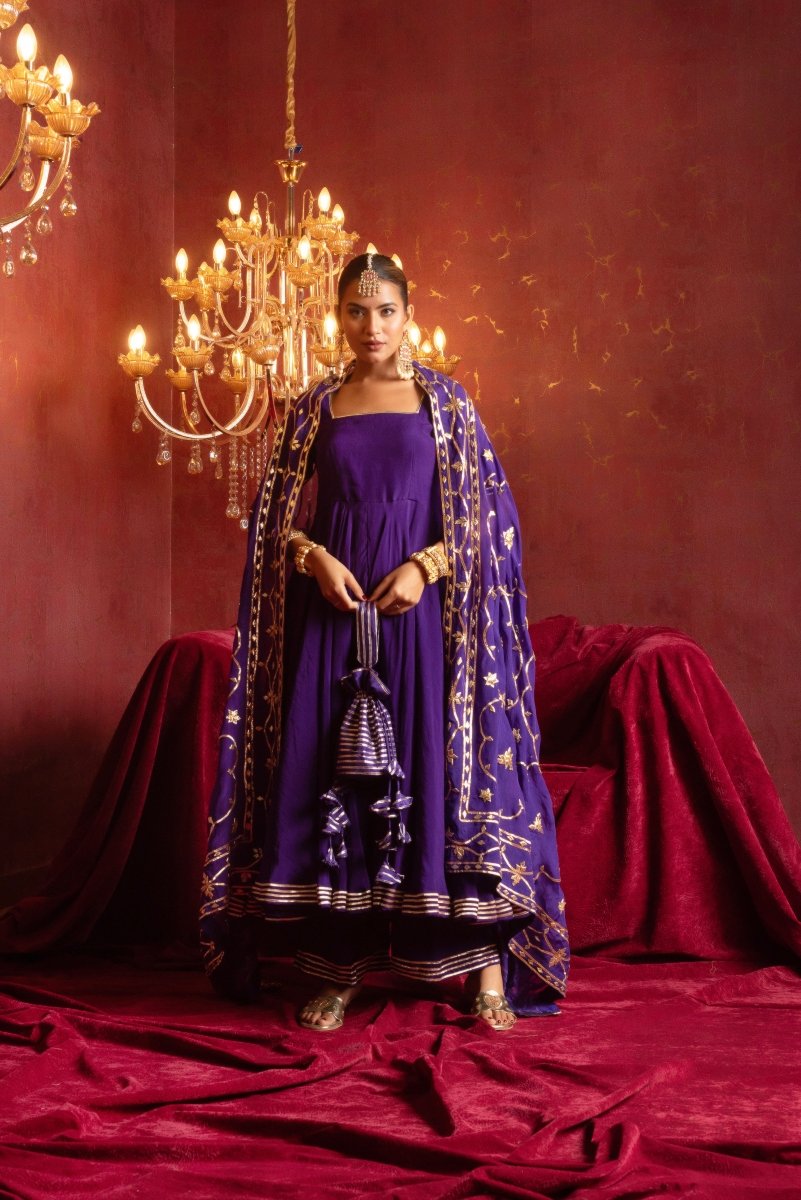
Honestly, both. A screen or digital print can be lovely. I buy hand block when I want the slightly imperfect, handmade look and I care about who made it. For an everyday hand block suit set, something like the Dhoop Chaav aqua blue set (around ₹5,849, all cotton including the dupatta) is the kind I would reach for. For a function, I would look at the dressier Chhipa Bazar pieces like the Red Mastani anarkali set (around ₹16,900), which pairs the block print with gota patti and a 48 inch anarkali.
If you want to browse by silhouette, the anarkali sets, sharara sets and kurta and suit sets pages all mix in hand block pieces. Pomcha's older post on hand block print kurta set designs is a decent visual reference too.
Caring for hand block pieces
All the hand block sets I have linked here say dry clean on their listings, so that is what I follow. If you have questions about a specific piece, the FAQ page is the first place I would look.
Frequently Asked Questions
What is the quickest way to tell hand block from screen print?
Turn the fabric over. Barkha Boutique's guide says hand block print usually shows dye on the reverse, while screen print shows only faint colour.
Is screen print bad quality?
No. The same guide says screen printing is the main commercial method and not inferior in itself. It only becomes a problem when it is sold as hand block.
Why are hand block suit sets usually more expensive?
Each motif is stamped by hand with a carved block, and iTokri's guide describes the process as more time-consuming than screen printing.
Are the imperfections in hand block print a defect?
Not in my view. Slightly uneven edges and small differences between repeats are what the guides point to as signs of hand printing.
How do I check a print when buying online?
Read the product name and description for the printing method, zoom into the photos to compare repeats, and ask the seller for a photo of the reverse side.
Sources
- Barkha Boutique, "Block Print vs Screen Print vs Digital Print", for the reverse side, repeat, edge and colour checks, and the point that screen print is not inferior.
- iTokri, "How to differentiate between Hand block printing and Screen printing", for how each method works and the block woods used.
- Wikipedia, "Bagru print", for Bagru's hand block tradition, the Chhipa community, dabu and its GI status.
- Pomcha Jaipur product pages linked above, for fabric, lengths, wash care and prices (checked October 2026).

Written by Archana Choudhary